CrossRoads Construction — Trust in God
Know-How

25 years of dirt, written down plain.

Short answers to the questions we get on every property walk. No jargon, no upsell — just what the ground does.

Know-How № 1

Why a good gravel drive starts with a culvert

Water is what ruins a drive — not traffic. Every rut you've ever cussed started as water that had nowhere to go, so it went through your rock instead of under it.
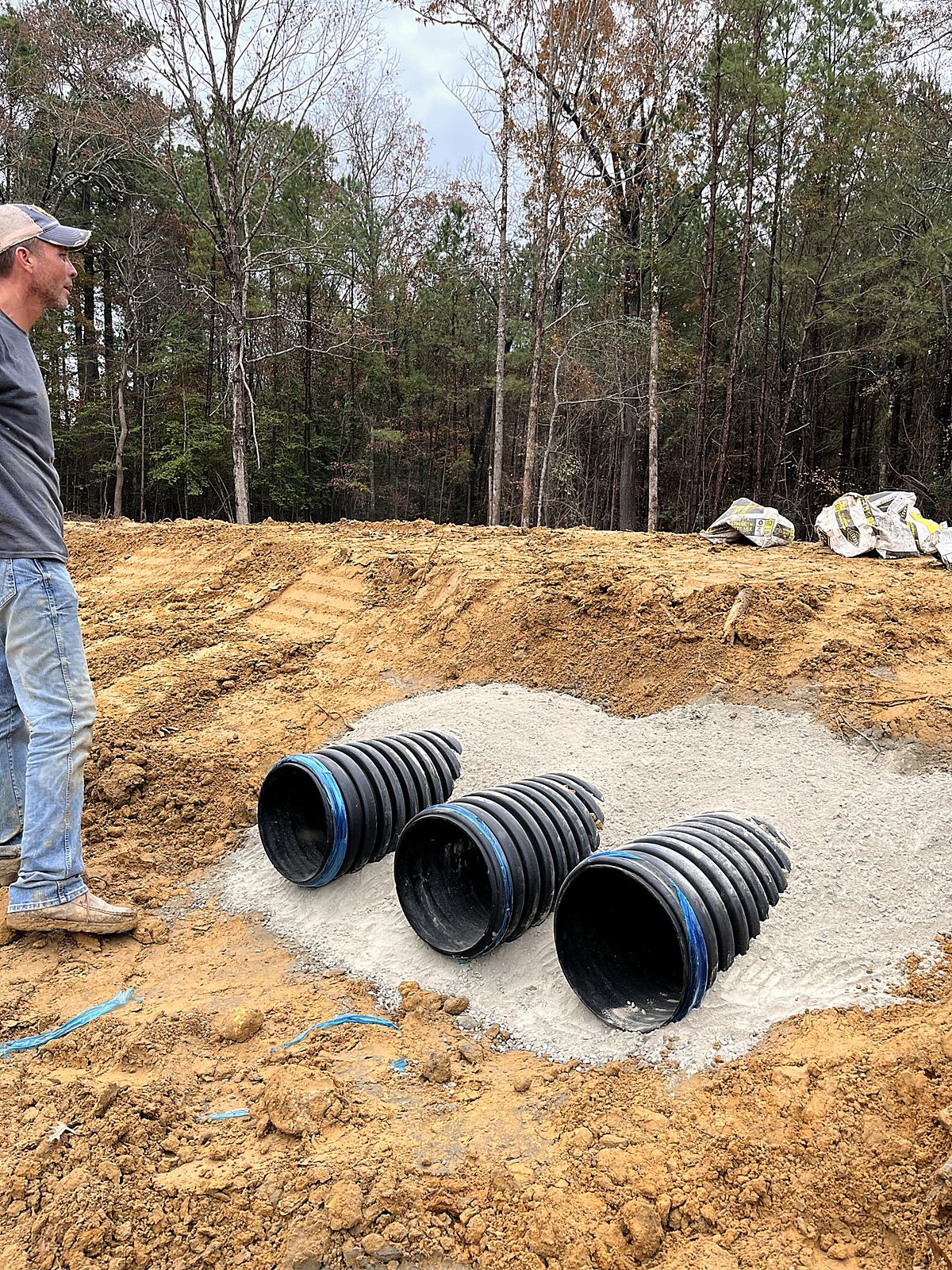
Culvert pipes staged and ready to set
Culverts staged and ready to set — the part of the drive nobody sees and everybody needs

A culvert set at the low point moves runoff under the road. Pair that with a crowned finish — higher in the middle so rain sheds to the sides — and the same gravel that washes out in two years will hold for ten. It's the least glamorous money you'll spend on a drive and the best.

If your existing drive keeps rutting in the same spot, that spot is telling you where the culvert should have gone. We can usually fix it without rebuilding the whole road.

Know-How № 2

Where should a pond go?

The best pond site is usually the one the land already picked: a low spot with a natural drainage area feeding it and soil with enough clay to hold water. Fight the land and you'll pay for it twice — once to dig, and again to fix.

Before we dig, we look at three things: how much water the site actually catches when it rains, whether the soil will hold it (that red clay around here is often a friend), and where the overflow goes when a big storm fills it. A pond without a planned overflow isn't a pond, it's a future washout.

Walk your place after the next hard rain and note where water sits. That's where the conversation starts.

Know-How № 3

Why house pads fail

When a pad cracks a slab, it's almost never the dirt you can see. It's organic material that got buried instead of cleared — stumps, roots, topsoil — rotting and settling under the fill, or fill that went in wet and loose instead of compacted in lifts.

A pad done right is boring: strip the organics, build up in compacted layers, and grade so water runs away from the slab on every side. That last part matters most. A perfect pad with bad drainage becomes a bad pad the first wet winter.

If you're comparing bids and one is a lot cheaper, ask what happens to the stumps and how the fill gets compacted. The answer is usually the difference.

Let's walk your property.

Tell us what you're planning — a pad, a pond, a drive, a teardown — and we'll come look, talk it through, and give you a straight answer at no cost.

Request a Free Estimate Text Us a Photo
Jason Knight (870) 678-3883  ·  Jason Greer (903) 494-7352
📞 Call 💬 Text a Photo Free Estimate